Variety of Living Organisms
Eukaryotes
Eukaryotes are organisms that have a nucleus and organelles found within a plasma membrane.
Subcellular Structures in Plant and Animal Cells:
Click me to open.
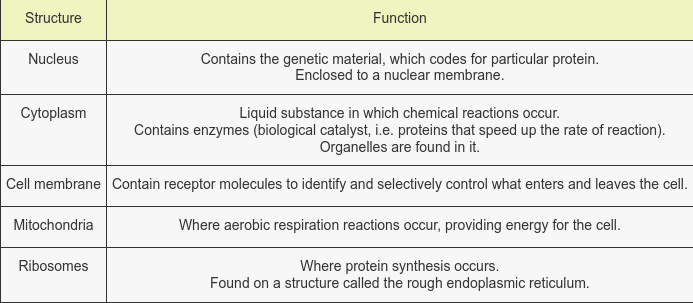
Plant Kingdom
Plants, ranging from cereals like maize to herbaceous legumes such as peas, showcase an intriguing diversity. These multicellular organisms house chloroplasts, where the magic of photosynthesis takes place. Chlorophyll pigments within these chloroplasts absorb sunlight, facilitating this vital process.
Key Features:
- Chloroplasts: The powerhouse of photosynthesis.
- Cellulose Walls: Providing structural integrity to cells.
- Permanent Vacuole: Storing cell sap and enhancing cell rigidity.
- Carbohydrate Storage: Starch or sucrose reserves.
Animal Kingdom
From mammals like humans to insects such as flies, the animal kingdom is as diverse as it is captivating. Animals, unlike plants, cannot perform photosynthesis and lack cell walls. Their nervous systems coordinate intricate movements, and they store carbohydrates as glycogen.
Notable Aspects:
- Nervous Systems: Orchestrating movement and responses.
- Glycogen Storage: Carbohydrate reserve for energy.
Fascinating Fungi
Fungi, with their unique structures, offer a different perspective. Their bodies often form mycelium composed of hyphae, some being single-celled like yeast. Chitin-based cell walls and saprotrophic nutrition, employing digestive enzymes for external digestion, set fungi apart.
Distinctive Traits:
- Mycelium Formation: A network of hyphae structures.
- Chitin Cell Walls: Providing support and protection.
- Saprotrophic Nutrition: Utilizing external digestion.
Protoctists' Diversity
Protoctists, though single-celled, exhibit a wide range of characteristics. Some, akin to animal cells like Amoeba, inhabit pond water, while others, resembling plants, house chloroplasts (e.g., Chlorella).
Varied Traits:
- Single-celled Nature: Displaying diverse features.
- Chloroplast Presence: Resembling plant-like attributes.
Prokaryotes: The Simple Structures
Bacteria Insights
Bacteria, such as Lactobacillus bulgaris and Pneumococcus, lack a nucleus and membrane-bound organelles. They possess circular DNA and cell walls, with some capable of photosynthesis but mostly reliant on other organisms for sustenance.
Defining Characteristics:
- Spherical or Rod-Shaped: Diverse forms and sizes.
- DNA Arrangement: Circular chromosomes.
- Adaptability: Thriving through various feeding mechanisms.
Pathogens: Unveiling Disease-Causing Agents
Viral World
Viruses, while not living organisms, wield immense influence as parasitic entities. They infect living cells, utilizing their machinery for replication. With various shapes and sizes, viruses consist of nucleic acid and a protein coat.
Intriguing Elements:
- Parasitic Nature: Replicating within host cells.
- Nucleic Acid Structure: DNA or RNA configuration.
Combatting Pathogenic Agents
Pathogens, spanning fungi, bacteria, protoctists, and viruses, cause diseases with unique methods of infiltration and reproduction.
Examples:
- Bacteria: Salmonella, known for toxin production.
- Protists: Malaria, utilizing animals as hosts.
- Fungi: Athlete's foot, spread through spores.